



In United States Revenue cycle management has become the financial backbone of healthcare providers and practices. According to fortune business Insights the global RCM market reached approximately upto $200 billion and is expected to grow at annual rate of 12%. Due to rapid rising in the RCM services industry the denial rate still sits between […]

Every denied claim is money a Texas practice has already earned but hasn’t been paid for. Across the country, providers are watching denial rates climb year after year, and Texas practices face an added layer of complexity: a fast-moving Medicaid filing clock, a mix of national and regional payers, and managed care organizations that each […]

The RVU medical abbreviation is one of the most important and often misunderstood terms in the healthcare finance field. RVUs, or relative value units, serve as the foundation for determining how much healthcare providers are paid for the services they perform. Understanding RVU Relative value units are a standardized way to determine the billable values […]

We are going to discuss the list of frequently used CPT and HCPCS codes to report skilled services. Not all codes are accepted by all payers. Always review state rules, consult the CPT manual, and confirm payment policies with insurers prior to billing. These codes are effective as of January 1, 2026. Take a look […]

Ancillary services can account for more than 10% of revenue in many specialty and primary care practices. But they can also create billing problems when claims are coded incorrectly, authorization is missed, or payer rules aren’t followed. If your practice offers lab work, imaging, physical therapy, or durable medical equipment alongside primary care, you’re already […]

Most healthcare practices don’t lose revenue through one big, obvious failure. They lose it in small, repeatable ways: a missed eligibility check here, an unattached modifier there, a claim that sits in a queue for three extra weeks. Individually, each mistake looks harmless. Add them up across hundreds of claims a month, and they quietly […]

Learn how to get credentialed with medical billing companies, understand the insurance credentialing process, avoid delays, and start billing faster.

Medical billing accuracy starts with selecting the correct Place of Service (POS) code. While these two-digit codes may seem minor, they play a significant role in determining how insurance payers process claims and calculate reimbursement. Choosing the wrong POS code can lead to claim denials, payment delays, compliance issues, and unnecessary administrative work. One code […]
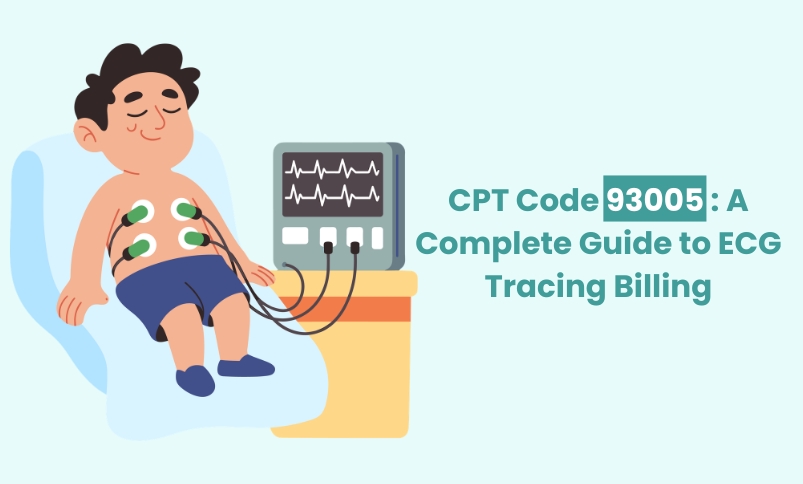
Navigating the complexities of medical coding is essential for a healthy revenue cycle. One code that often raises questions is CPT 93005. This guide provides a clear and comprehensive breakdown of CPT 93005, covering its definition, appropriate usage, reimbursement, and common billing questions. At RevenueES, we help healthcare providers across all 50 states improve claim […]

Place of service codes are a key component of medical billing in the United States. Submitted on the CMS-1500 claim form, these codes indicate the precise location where a service was rendered. To receive appropriate reimbursement and stay compliant with regulations, these codes must be accurate. CMS maintains a wide range of place-of-service codes, dozens […]

Accurate coding and billing are essential for maximizing reimbursements and maintaining compliance in healthcare practices. Among the most frequently used cardiology-related procedure codes is 93000 CPT code, which is used for reporting a complete electrocardiogram (ECG/EKG) service. Understanding the code description, reimbursement rules, modifiers, and billing guidelines can help providers avoid denials and ensure accurate […]
POS 12 in medical billing represents services delivered at a patient’s home. Getting this code right is essential for home health agencies, visiting physicians, and mobile providers. This guide covers everything about POS 12. You will learn its definition, reimbursement rules, how it differs from POS 11, and whether Medicare accepts it. What is POS […]

If you’ve been coding for a while, you know pancreatitis is one of those conditions that looks simple on the surface — inflammation of the pancreas, right? — but turns into a rabbit hole the moment you open the codebook. Is it acute or chronic? What caused it? Is there necrosis? Is that necrosis infected? […]

CLIA compliance is one of the most consistently misunderstood areas in physician billing. Many providers assume their billing team handles it automatically. Others do not realize their CLIA certificate has expired until claims are denied. This article breaks down exactly what a CLIA number is, how it directly affects your reimbursements, what types of certificates […]

Migraine is one of the most commonly coded neurological conditions in clinical practice. Yet it is also one of the most frequently miscoded, because the ICD-10 classification for migraine demands a level of clinical specificity that many providers underestimate. This guide covers every major migraine ICD-10 code your team needs, including the 2024 additions that […]
